Thermomix Lemon Yogurt Cake with Lemon Glaze

This lemon yogurt cake is one of the easiest cakes to make in the Thermomix. Greek yogurt and oil replace butter entirely, so there’s no softening or creaming, just a couple of quick mixes in the Thermomix and it’s in the oven. The result is a tender crumb with bright lemon flavour, finished with a tangy glaze that sets just enough to drip down the sides.

A loaf of glazed lemon cake sits on a white plate. The cake is topped with icing and lemon zest, and one end has been sliced to reveal the soft, moist interior.

Why You’ll Love This Recipe

  • The lemon glaze sets with a delicate crunch, contrasting the soft sponge.
  • The Thermomix mixes the batter in under 30 seconds.
  • Just 6 simple ingredients for the cake.

Recipe Ingredients
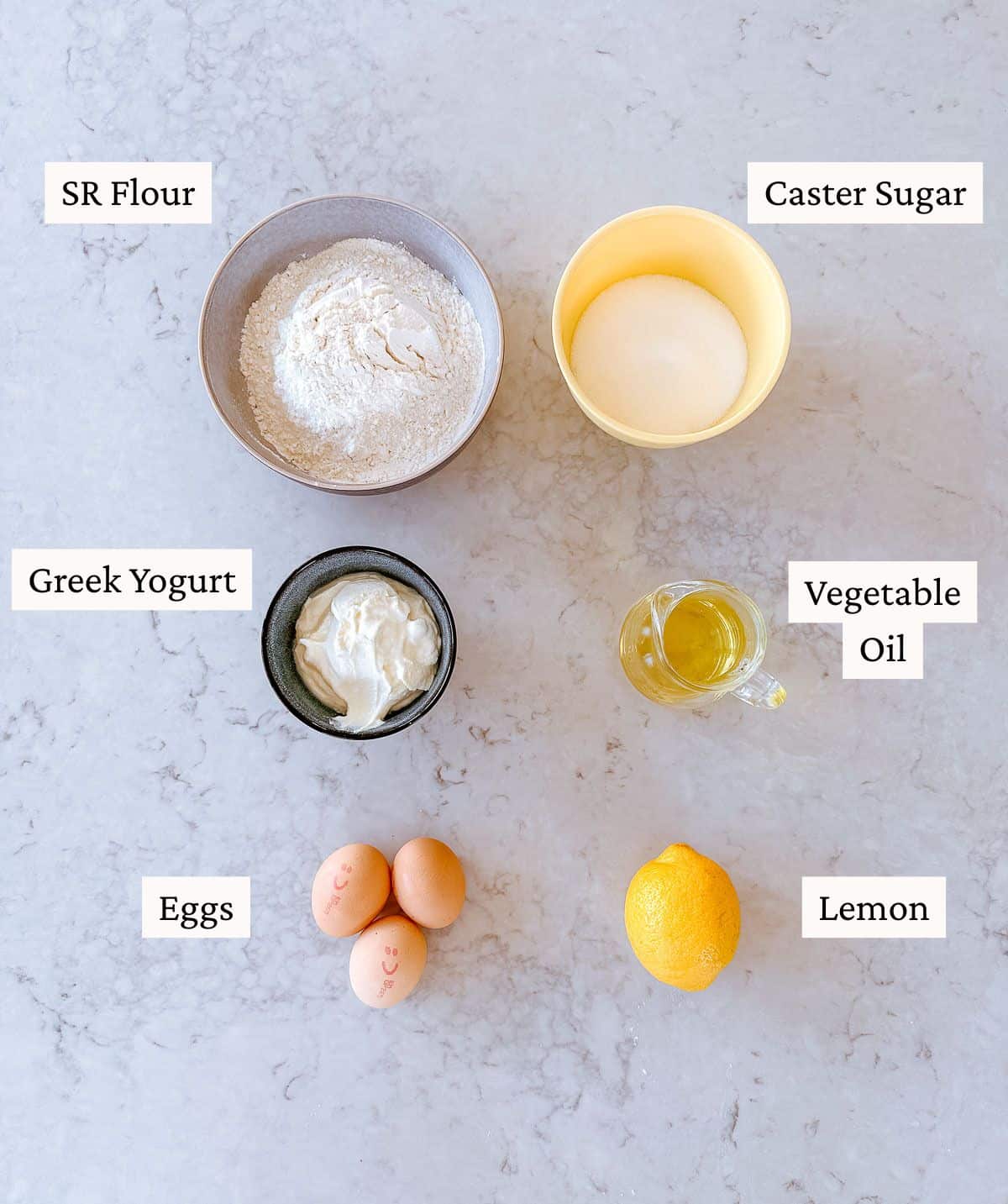
Six baking ingredients on a worktop: a bowl of self-raising flour, a bowl of caster sugar, a small bowl of Greek yoghurt, a small jug of vegetable oil, three eggs, and a whole lemon, each labelled.

Please see the recipe card at the bottom of this post for the full ingredients and quantities.

  • Lemon zest – use the zest of one large lemon or two small ones.
  • Greek yogurt – full-fat Greek yogurt gives the best texture. Natural yogurt works as a substitute.
  • Eggs – use 3 large eggs.
  • Vegetable oil – use a neutral-flavoured oil such as canola or sunflower. Avoid olive oil as the flavour is too strong and will come through in the finished cake.
  • Caster sugar
  • Self-raising flour – use self-raising flour, not plain flour, as it provides the lift the cake needs. If you only have plain flour, you can make self-raising flour in the Thermomix with just two ingredients.

For the Lemon Glaze

  • Icing sugar – sift it before mixing to avoid lumps in the glaze.
  • Lemon juice – use 1-2 tablespoons.

Step-by-Step Directions

These step-by-step Thermomix photos are here as a visual guide. You’ll find all the exact times, temperatures, and quantities in the printable recipe card below.
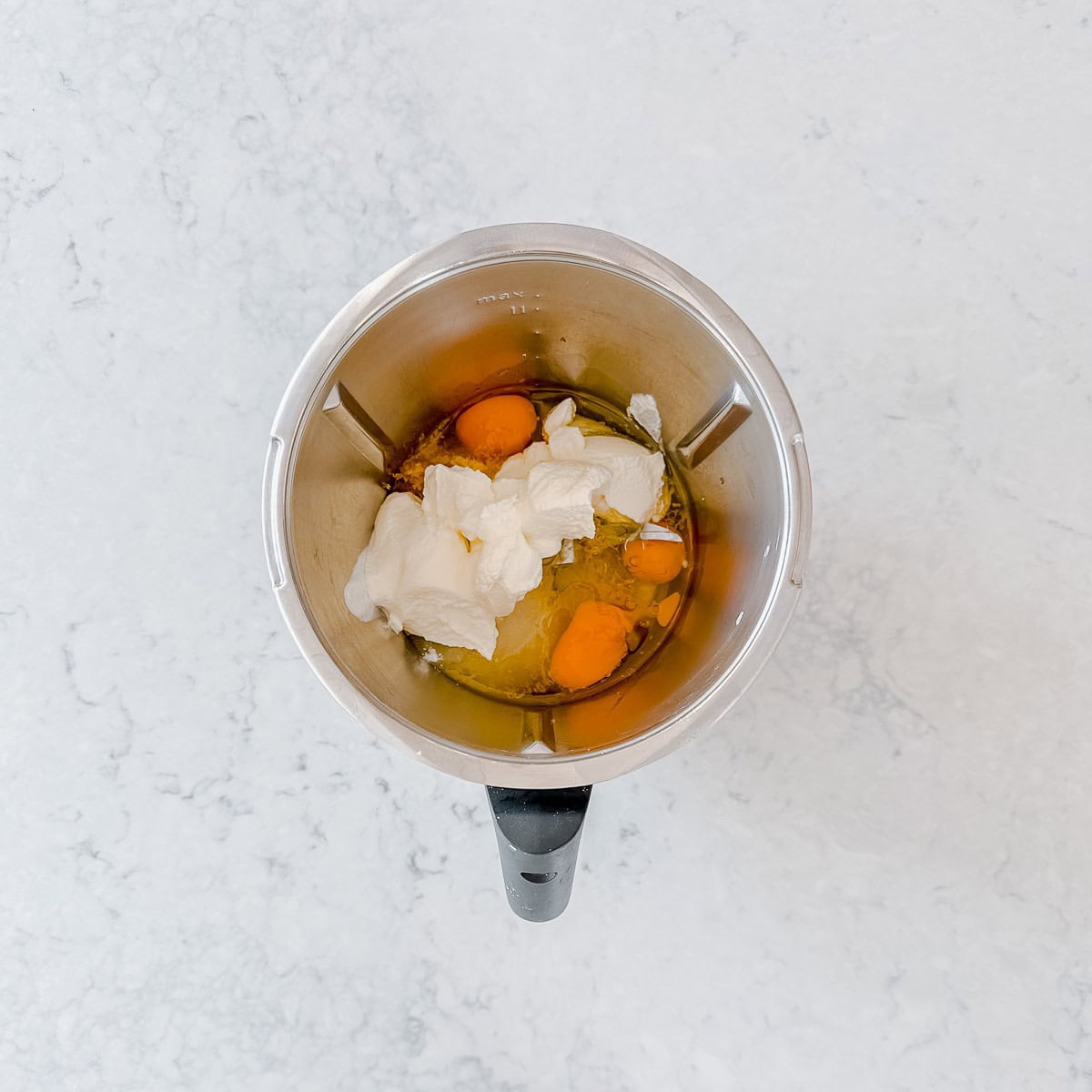
Eggs, sugar, oil and lemon zest in a thermomix bowl.
  1. Add the vegetable oil, caster sugar, lemon zest, eggs and Greek yogurt to the Thermomix bowl (reserve a little zest for decorating the finished cake).
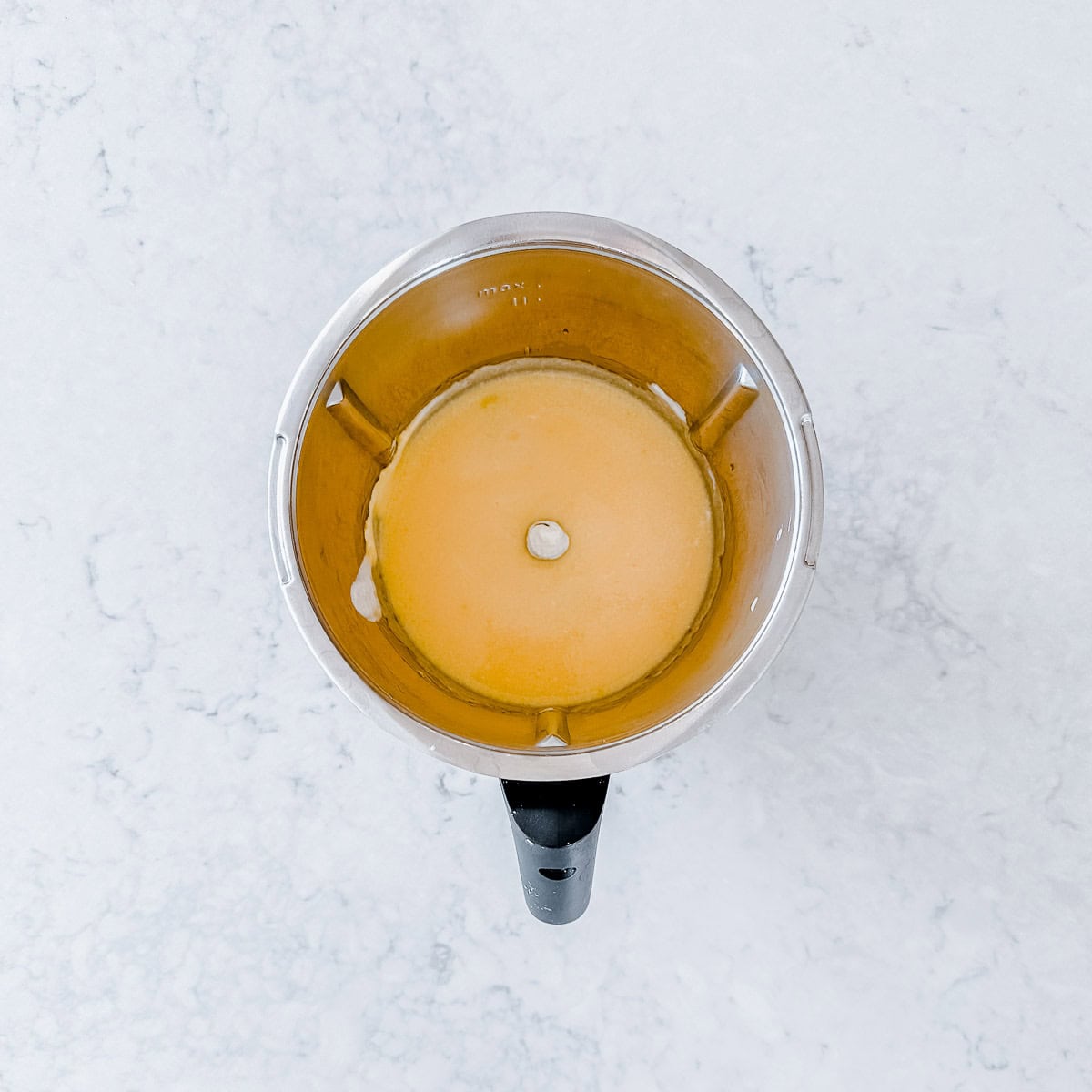
Cake batter in a thermomix bowl.
  1. Mix for 15 sec/speed 3, then scrape down the sides of the bowl with a spatula.
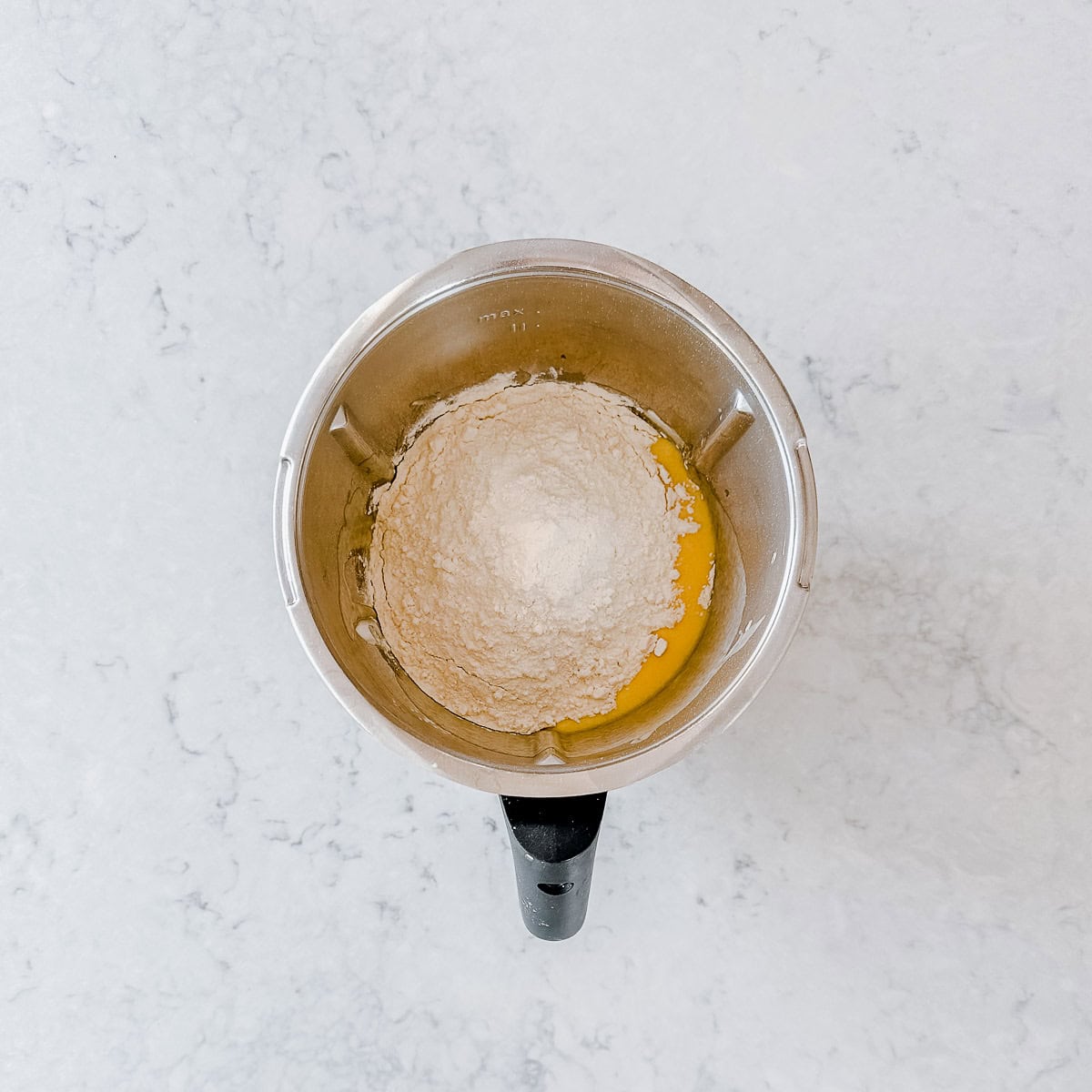
Flour added to a cake batter in the thermomix bowl.
  1. Add the self-raising flour.
Cake batter in the Thermomix bowl, with a pink spatula, sitting on a marble surface.
  1. Mix for 12 seconds on the dough setting. Stir in any remaining bits of flour by hand. The mixture will be a bit lumpy – this is normal!
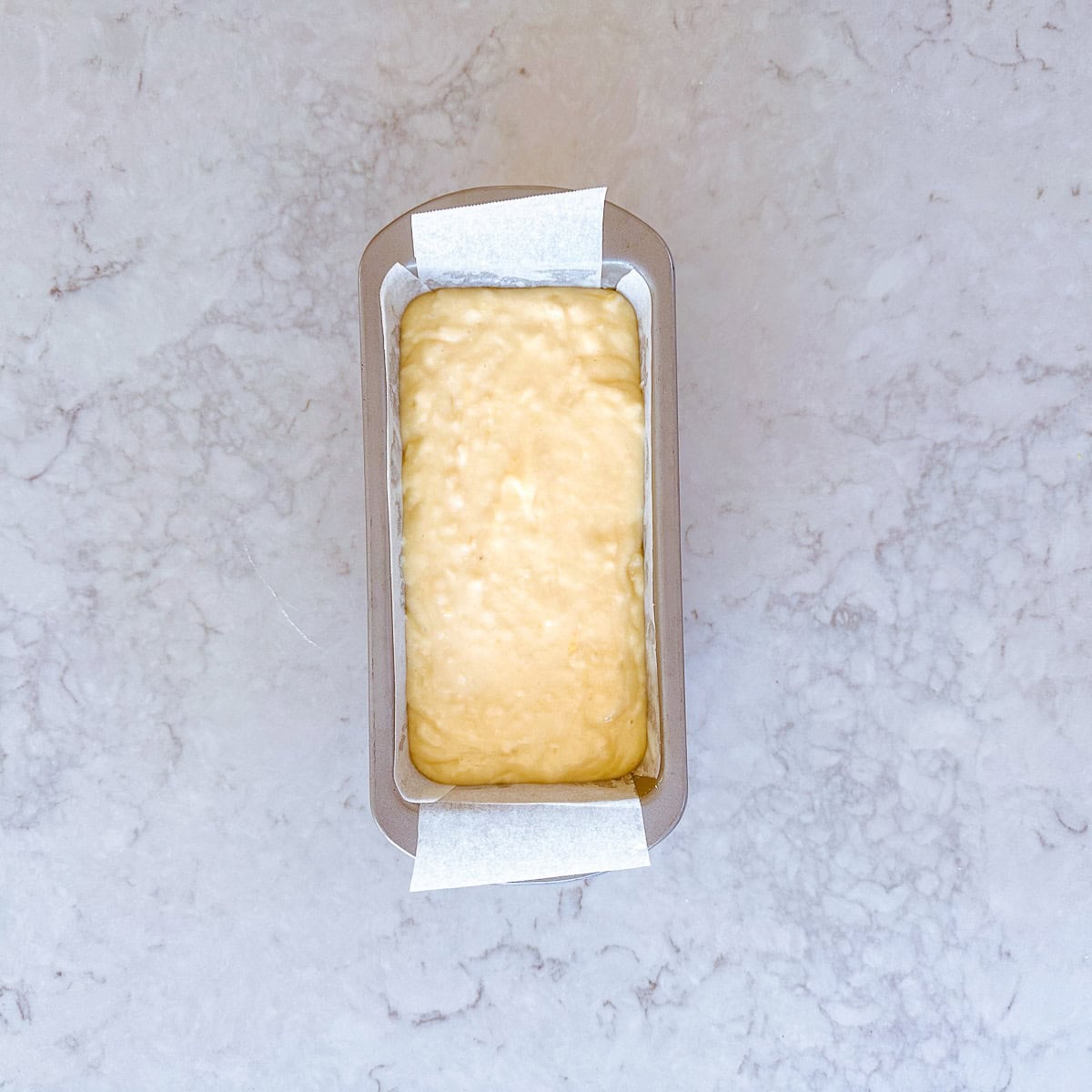
Cake batter in a rectangle shaped baking tin.
  1. Pour the batter into the prepared loaf tin.
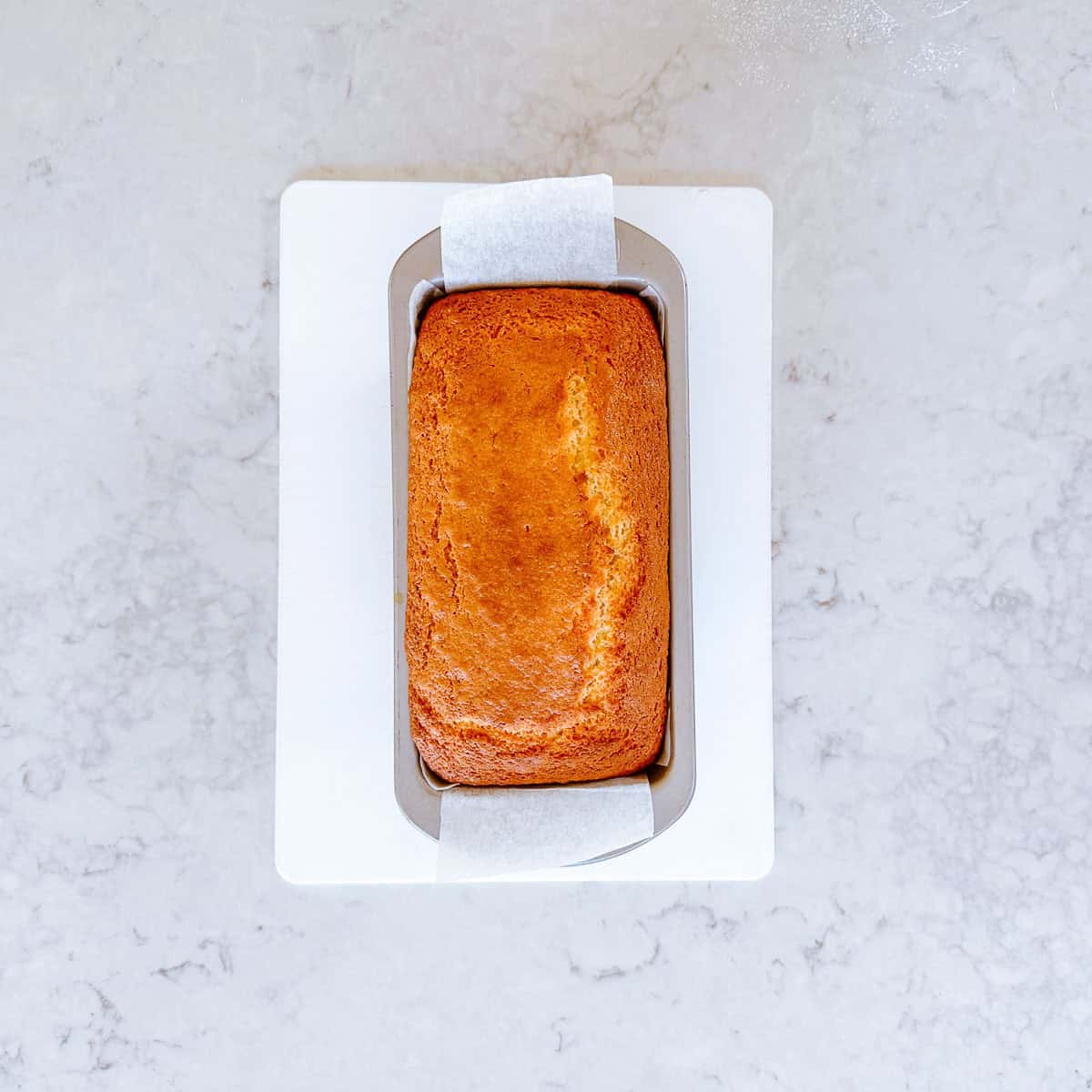
A baked cake in a rectangle shaped baking tin.
  1. Bake for 50-60 minutes, until a skewer inserted into the centre comes out clean. Leave the cake in the tin for 10 minutes, then turn out onto a wire rack to cool completely before glazing.

For the Lemon Glaze
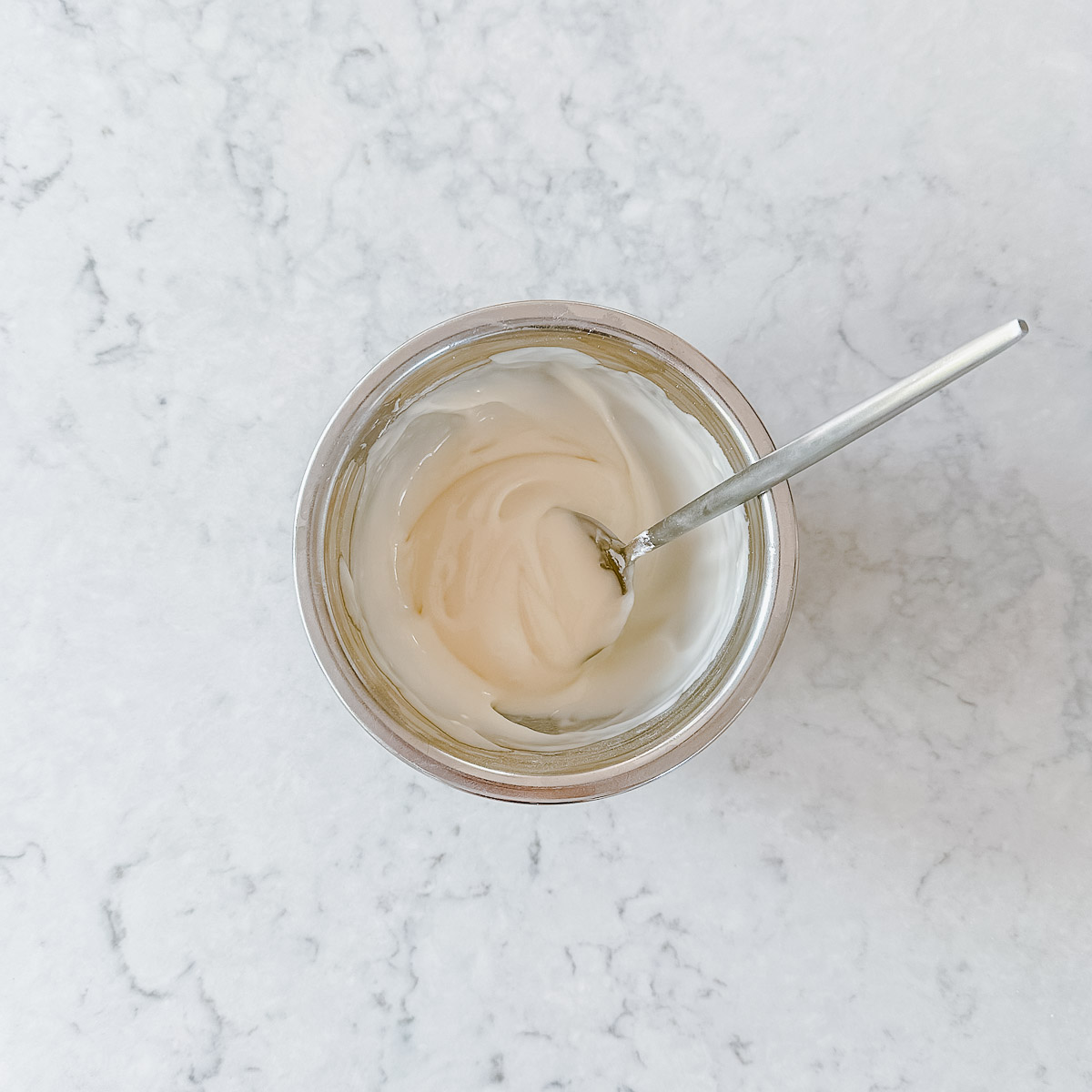
A metal bowl filled with lemon icing.
  1. Sift the icing sugar into a small bowl. Add 1-2 tablespoons of lemon juice and stir until smooth and runny. Since this makes a small amount, it’s easier to mix by hand in a small bowl rather than using the Thermomix.

An iced cake sitting on a baking rack.
  1. Before icing, slide a large sheet of baking paper under the wire rack (with the cake still on it) to catch any drips. Pour over the cooled cake and allow it to drizzle down the sides. Scatter over the reserved lemon zest to decorate.

Recipe Tips

Use a large, fresh lemon (or two small ones): Since the cake gets its lemon flavour from zest alone, not juice, both size and freshness matter.

Don’t overmix once the flour is added: The dough setting folds the flour in gently. Finish any remaining flour by hand but try not to overmix.

A crack on top is expected: Loaf cakes often crack down the centre as they rise. It doesn’t affect the texture or flavour.

Cool completely before glazing: If the cake is still warm, the glaze will run off rather than setting over the top.


Storage

Store the cake in an airtight container at room temperature for up to 3 days. The texture is at its best on day one and two, but it holds up well on day three thanks to the oil and yogurt in the batter.

To freeze, wrap individual slices in cling film and place in an airtight container or freezer bag. Freeze for up to 3 months. Thaw at room temperature before serving. If you plan to freeze the cake, add the glaze after thawing rather than before.

A loaf of lemon cake on a white plate, topped with white icing and sprinkled with lemon zest, set on a marble surface.
A loaf of glazed lemon cake sits on a white plate. The cake is topped with icing and lemon zest, and one end has been sliced to reveal the soft, moist interior.

Thermomix Lemon Yogurt Cake with Lemon Glaze

Be the first to rate it!
This cake uses oil instead of butter, along with Greek yogurt, for a soft, moist crumb. Lemon zest runs through the batter for a bright, zesty flavour, and it's topped with a tangy lemon glaze.
Prep Time:10 minutes
Cook Time:50 minutes
Total Time:1 hour
Servings: 10
Author: Vicki Newton

Ingredients

  • 100 g vegetable oil such as canola or sunflower oil
  • 220 g caster sugar
  • Zest of 1 large lemon or 2 small lemons, see notes
  • 3 large eggs
  • 220 g Greek yogurt (full fat) or natural yogurt
  • 260 g self-raising flour

For the Lemon Glaze

  • 120 g icing sugar sifted
  • 1-2 tablespoons lemon juice

Instructions

  • Preheat the oven to 180°C/350°F (160°C fan). Grease and line a 22cm x 11cm x 7cm loaf tin (or similar) with baking paper, leaving an overhang at each end to lift the cake out easily.
  • Add the vegetable oil, caster sugar, lemon zest, eggs and yogurt to the Thermomix bowl and mix for 15 sec/speed 3 (reserve a little zest for decorating the finished cake). Scrape down the sides of the bowl with a spatula.
  • Add the flour and mix for 12 sec/dough setting to gently fold it in. Scrape down the sides and bottom of the bowl and fold in any remaining bits of flour by hand with a spatula. The mixture will be lumpy, which is normal for this batter.
  • Pour the cake batter into the prepared loaf tin. Bake in the oven for 50-60 minutes, until a skewer inserted into the middle comes out clean.
 The top may crack, which is normal for loaf cakes.
  • Allow the cake to sit in the tin for 10 minutes, then turn it out onto a wire rack to cool completely before icing.

For the Lemon Glaze

  • Sift the icing sugar into a small mixing bowl. Add 1-2 tablespoons of lemon juice and mix until the icing is runny.
  • Put a large sheet of baking paper under the wire rack (with the cake still on it) to catch any drips, then pour the icing over the cake and let it drizzle down the sides. Decorate with extra lemon zest. Note: As this makes a small amount of icing, I find it easier to mix it by hand in a small bowl rather than using the Thermomix.

Notes

Lemon: The cake gets its lemon flavour from zest, not juice, so use a large, fresh lemon (or two small ones) for the best flavour.
Storage: Store the cake in an airtight container at room temperature for up to 3 days, or freeze for up to 3 months. If freezing, add the glaze after thawing rather than before.

Did you make this recipe?

I’d love to hear what you think – please leave a comment and recipe rating below! You can also subscribe to my email list to never miss a new Thermomix recipe.
You May Also Love...

Leave a Reply

Your email address will not be published. Required fields are marked *

Recipe Rating